
Wednesday, April 24, 2024
Where Does the Shift Go?
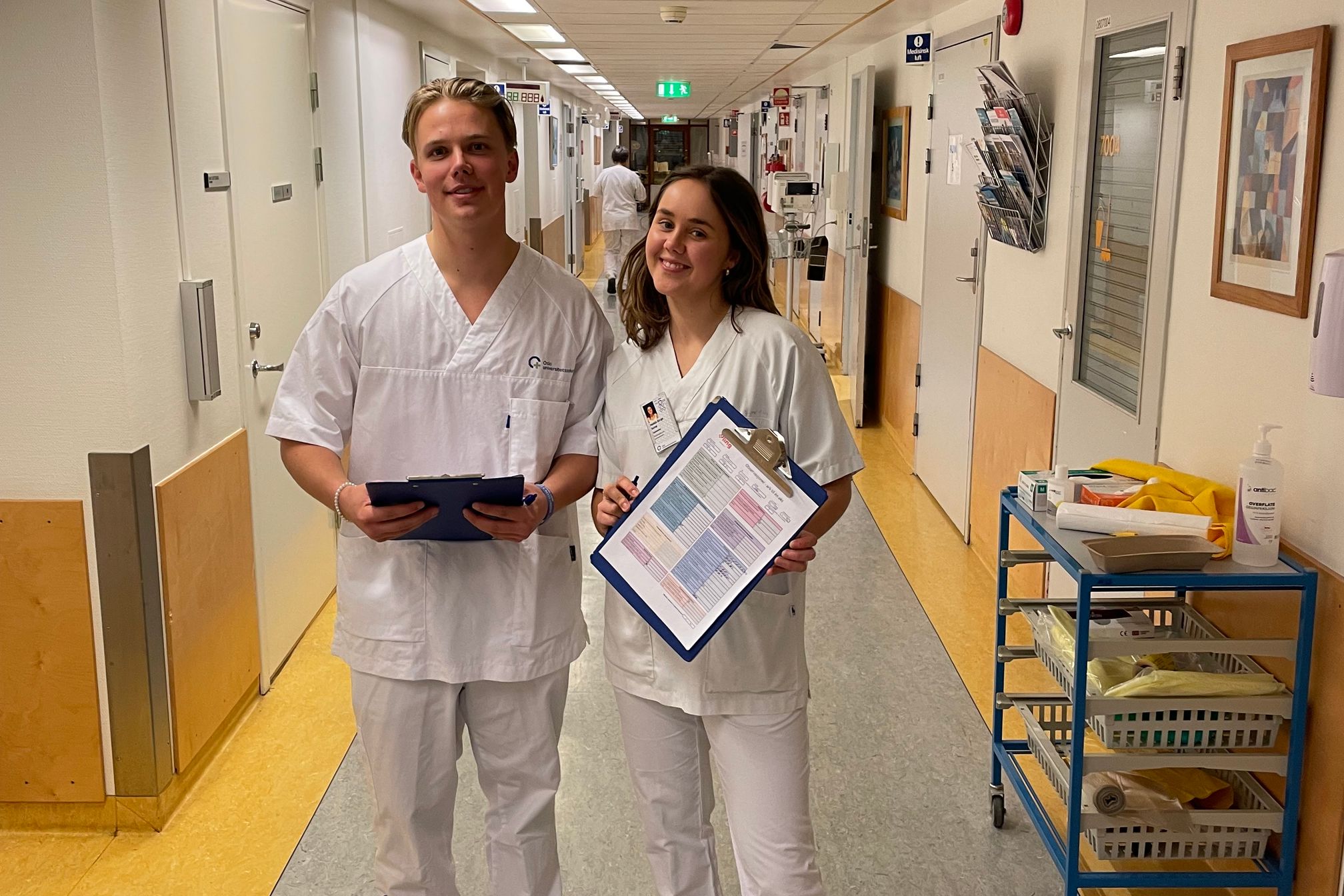
At Pling, we believe the best solutions come from understanding problems firsthand. So we did something unusual for a tech company: we went to a hospital and watched.
Over 30 hours of structured observations at a surgical ward in Eastern Norway, our team documented what nurses actually do during their shifts — recording activities every 15 seconds across day and evening shifts. The result: 6,929 data points that paint a minute-by-minute picture of a nurse's workday.
What we found isn't just a statistic. It's a wake-up call.
Only 51% of a nurse's shift goes to direct patient care.
The remaining 49% disappears into phone calls, walking between rooms, searching for information, and coordinating tasks that could be handled differently.
Breaking down the 49%
We categorized every observed task into three groups: directly value-creating, necessary non-value-creating, and non-value-creating (waste). Then we went further — tagging each task by whether it could be eliminated through better digital communication.
The breakdown:
- 51.0% — Direct patient care (medication, bedside care, documentation)
- 36.6% — Necessary overhead that remains (phone calls, cleaning, bed management)
- 6.4% — Necessary overhead that Pling eliminates (walking to rooms blind, looking up requests at workstations)
- 4.1% — Waste that remains (printer problems, searching for phone numbers)
- 1.9% — Waste that Pling eliminates (checking where a call bell rings, asking colleagues who called)
That 6.4% + 1.9% = 8.2% of the entire shift. In minutes, that's 37 minutes per nurse, per shift — lost to tasks that share a single root cause: nurses lack real-time information about what patients need, where to go, and who is responsible.
What 37 minutes actually looks like
Consider this scenario, which we observed repeatedly:
- Patient presses call bell
- Nurse walks to room
- "What do you need?"
- "I feel nauseous."
- Nurse walks to supply room for a basin
- Nurse walks back to room with basin
- Patient finally gets help
Seven steps. Two blind trips. For one patient.
Now imagine the patient could send a message: "I feel nauseous." The nurse sees it on their phone, grabs a basin on the way, and arrives prepared. One trip. Three steps.
This isn't a hypothetical. It's what Pling does.
It goes beyond nursing tasks
When patients can describe exactly what they need, requests don't always have to go to the nurse. A request for coffee with milk routes to kitchen staff. A request for a clean shirt goes to the ward assistant. A clinical concern goes to the nurse. Everyone handles what they're trained for.
Importantly, Pling is an information and logistics tool — it does not replace clinical judgement. No medication is administered, and no clinical decision is made, without the nurse's own assessment. Pling ensures they arrive informed and prepared.
A crisis that extends beyond one ward
What we observed locally reflects a continental emergency. The EU is projected to face a shortage of 4.1 million healthcare workers by 2030, with nursing shortages alone reaching 2.3 million (WHO Europe). 52% of healthcare workers report burnout (The Lancet, 2023). In Germany alone, sickness absence costs €200 billion annually — 4.5% of GDP (Fortune, 2024).
From March 2025, the EU's European Health Data Space regulation requires all hospitals to transition to interoperable digital systems. As hospitals invest in compliance, they simultaneously face the worst workforce crisis in a generation. The European Commission has explicitly called for labour-saving digital solutions as a strategic response.
What Pling changes
Based on our observational data, Pling can shift patient care time from 51% to approximately 59% — a 16% improvement. That's 37 minutes per nurse, per shift, redirected from logistics to care.
Across a ward with 10 nurses running two shifts a day, that's over 12 hours of reclaimed care time every single day.
We've published the full findings as an interactive experience on our website. You can explore the data, see the before-and-after comparison, and understand exactly which tasks Pling addresses — all backed by the numbers.
👉 Read the full study here.